
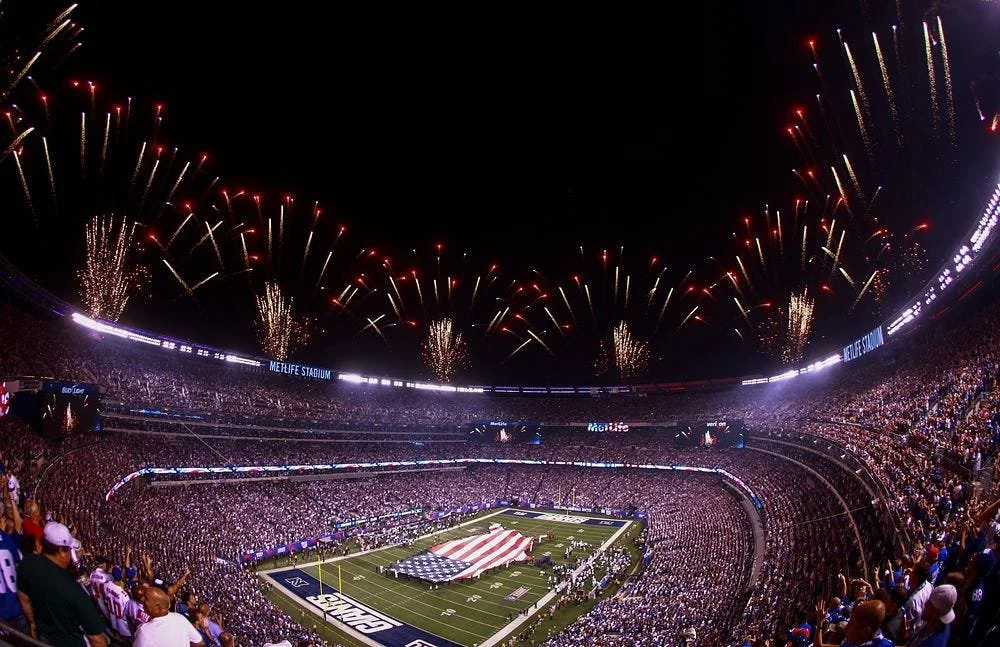
Many Americans either criticized or praised the choice of Bad Bunny for the Super Bowl LX Halftime show, but love it or not, Bad Bunny’s halftime show became the most talked-about moment of the night, not just for its music. From the first Spanish-speaking award winner for Best Album at the Grammys to the first Spanish-speaking performer at the Super Bowl, Bad Bunny has demonstrated immense talent for cultural storytelling and symbolism that resonates closely with many. The Puerto Rican-inspired set, costume design, choreography, and guest appearances capture the spirit, pride, and experiences of many Latin Americans.
The first of many sets from this halftime show was a recreation and homage to Puerto Rico’s history of jíbaros (rural workers) active in a sugarcane field. Behind Bad Bunny, workers wore traditional pavas (straw hats) and harvested sugarcane stalks with sharp machetes. This is referencing the historic colonial history and agricultural roots. After the Spanish-American War, the Invasion of Puerto Rico, and the Treaty of Paris officially ceding Puerto Rico to the United States, exploitation of land and labor by U.S. sugar factories was a major part of Puerto Rico’s agricultural society. The United States used tax incentives to encourage the production of sugar at the expense of Puerto Rico’s inferior economy, forcing Puerto Rico to have an economic reliance on the United States in exchange for cheap labor. 40 years later, 80% of Puerto Rico’s land was converted into U.S.-owned sugar plantations. This particular set honors not just the groundwork and history of Puerto Rico as a major sugar producer, but the jíbaros who work back in Puerto Rico to this day.
Through the fields of sugarcane were vibrantly rich stands, directly inspired by the daily life in Puerto Rico’s communities. These colorful racks included a piragua cart, a coco frio stand, a taco stand, a bright nail salon, a jewelry stand, and more. Storefronts included real local Puerto Rican shops, such as Highland Park’s Villa’s Tacos and Toñita’s, to highlight community-focused Latino businesses. Both of these businesses are known to be among the very few authentic Puerto Rican social clubs or restaurants in the United States. In fact, both of their owners, Victor Villa and Maria Antonia Cay (also affectionately known as Toñita herself), made an appearance during the halftime show. Villa was shown serving food behind a taco stand, while Toñita hands Bad Bunny a shot mid-performance from inside her set store.
In one sequence, dancers hang from 4 poles with powerlines connecting them. The powerlines spark as the performers swing around on ropes attached to their waists. These sparking power lines represent the frequent power outages in Puerto Rico due to the immense number of tropical storms it endures every year. Storms pass through the island of Puerto Rico frequently, causing droughts, landslides, floods, cyclones, and, in rare cases, hurricanes. This results in power outages being 7.8 times more frequent on the island than in the United States. In fact, the power outages are so common that the people of Puerto Rico have begun to construct alternative ways for power that don’t require power grids. This set and choreography pay tribute to these outages.
The passionate details incorporated in this Puerto Rican-inspired set design tell the story of their culture and land. From the economic, social, and natural history, they are represented in many parts during the Super Bowl LX Halftime show.